




Skip to content ↓

Teaching & Learning

At Thornleigh Salesian College, our Teaching and Learning Framework sets out the core principles that underpin high-quality teaching across the school and sixth form. It provides a shared approach to teaching while recognising that these principles will be applied appropriately within different subjects and phases of learning.

At the heart of the framework are three interconnected elements:
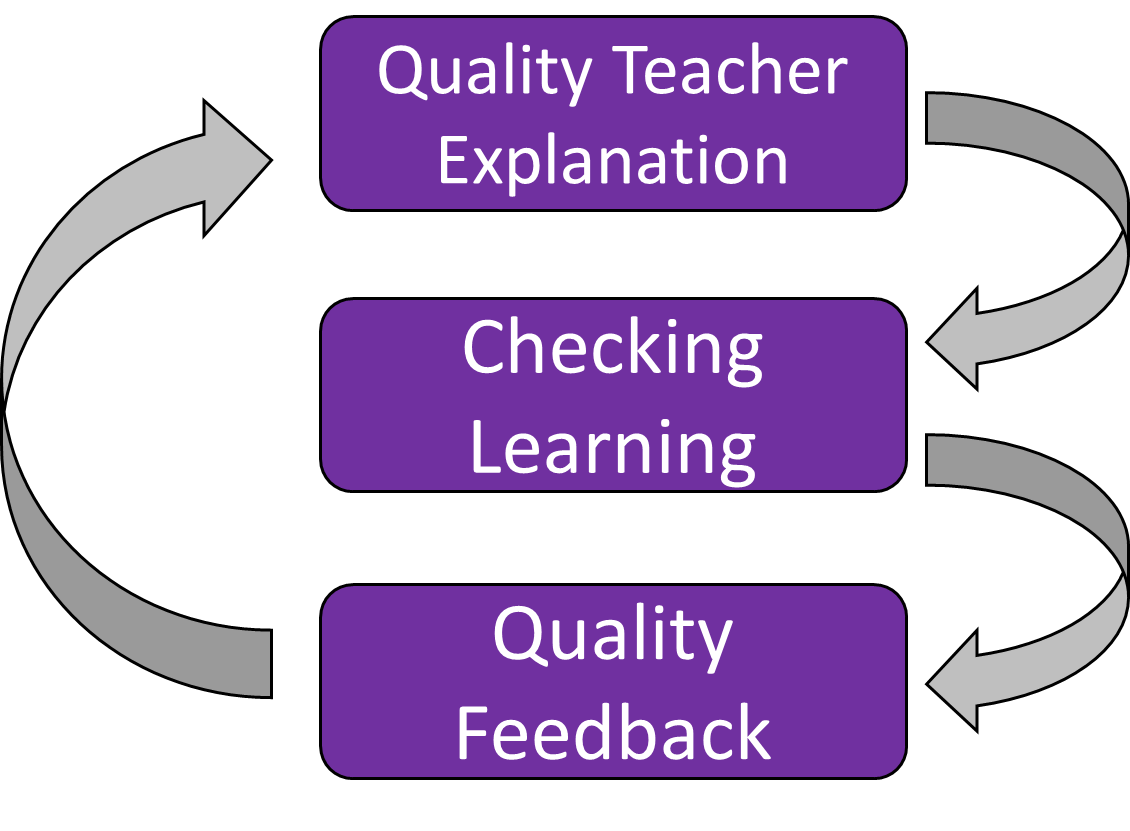
High-quality explanations introduce and develop new learning. Teachers then check students’ understanding so that misconceptions and gaps can be identified, before providing purposeful feedback and adapting teaching accordingly. This is an ongoing cycle rather than a fixed sequence, with teachers moving between explanation, checking and feedback in response to students’ learning. Together, these elements are designed to ensure that students think hard, develop secure knowledge and make strong progress over time.

Quality Teacher Explanation

  1. Quality explanations by the teacher are the starting point of all new learning. 

  2. Explanations should model the expert knowledge of the teacher and also model how this knowledge is used in the lesson. 

  3. Strong explanations always involve making connections to prior learning. 

  4. The best way to make explanations stick is to make them concrete through telling stories which are supported with models or diagrams.

  5. Explanations must be practiced and rehearsed. Students should never be exposed to a teacher's first attempt at an explanation. 

Checking Learning

  1. Checking learning is a continual process which provides essential feedback to the teacher. 

  2. The most effective method of checking learning is to ask questions, which are planned in advance, and respond to the needs of the class in real time through adaptations.

  3. Examples of checking learning  such as mini whiteboards, low stakes testing, cold-calling, verbal responses, written work and exam questions are only tools for checking learning. Teacher planning in the effective use of these is essential.

  4. Checks for learning must expose students' thinking to challenge them to demonstrate knowledge which is as good as the teacher has modelled, so a teacher can gain immediate feedback as to whether their explanation has been understood, identify misconceptions and then adapt accordingly. 

  5. Students should never be asked to respond to questions or a learning check without first being given the opportunity to demonstrate their thinking. The most effective method for this is paired discussion to ensure everybody is thinking. 

Feedback

  1. All feedback must be timely in accordance with the learning check set by the teacher, whether that is a response to verbal answer in class or written feedback to classwork.

  2. The most important purpose of feedback is to make clear where progress has been made and what has been achieved, as well as showing where further work is needed. 

  3. Teacher feedback must be clear and specific so that students are able to think and respond.

  4. When providing feedback teachers should be mindful of this involving all students responding to feedback. 

  5. Teachers should place the accountability for improvement on students, but this can only be successful if it is matched with further effective intervention through explanations and questioning.

The Conditions for Effective Teaching

For explanation, checking and feedback to have the greatest impact, they must take place within classrooms characterised by strong routines, high expectations and a positive learning environment. These provide the conditions in which students can focus, participate fully, think hard and respond successfully to teaching.

Teaching Strategies

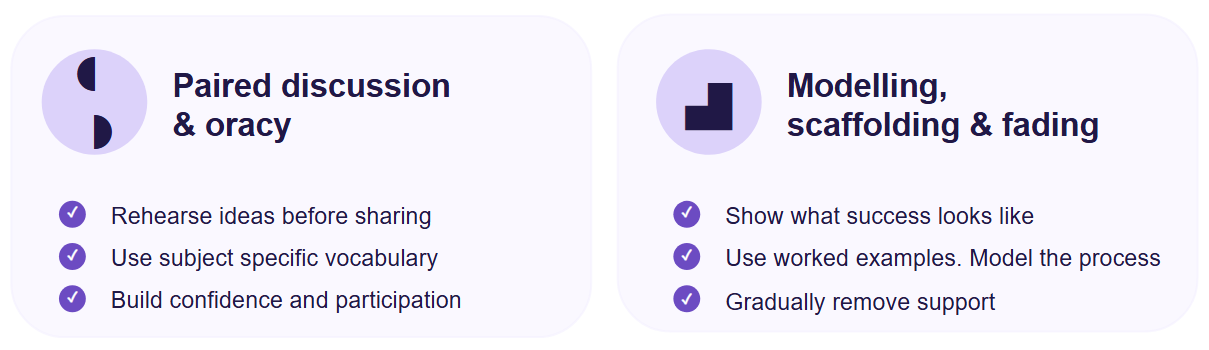
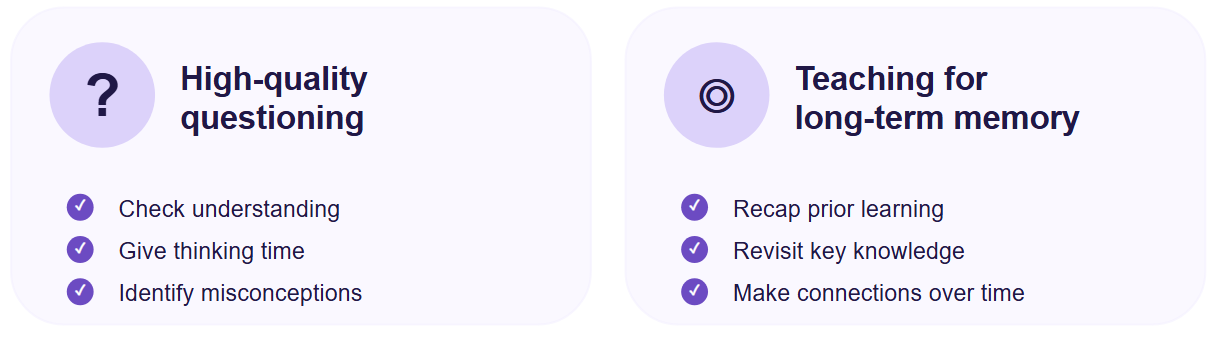
At Thornleigh Salesian College, we are committed to continually developing the quality of teaching so that all students can learn successfully. Teachers engage in regular professional development through whole-school and departmental CPD, including our dedicated Thursday sessions from 3.20pm to 4.30pm. This professional development supports teachers in applying our Teaching and Learning Framework effectively in the classroom. Our professional development focuses on evidence-informed teaching strategies that support students to think hard, participate fully, develop independence and remember what they have learned over time. These approaches provide a shared foundation for high-quality teaching across the school and sixth form, while allowing teachers and subject departments to apply them in ways that best support the curriculum and the needs of their students.

Current areas of focus include: